
 admin
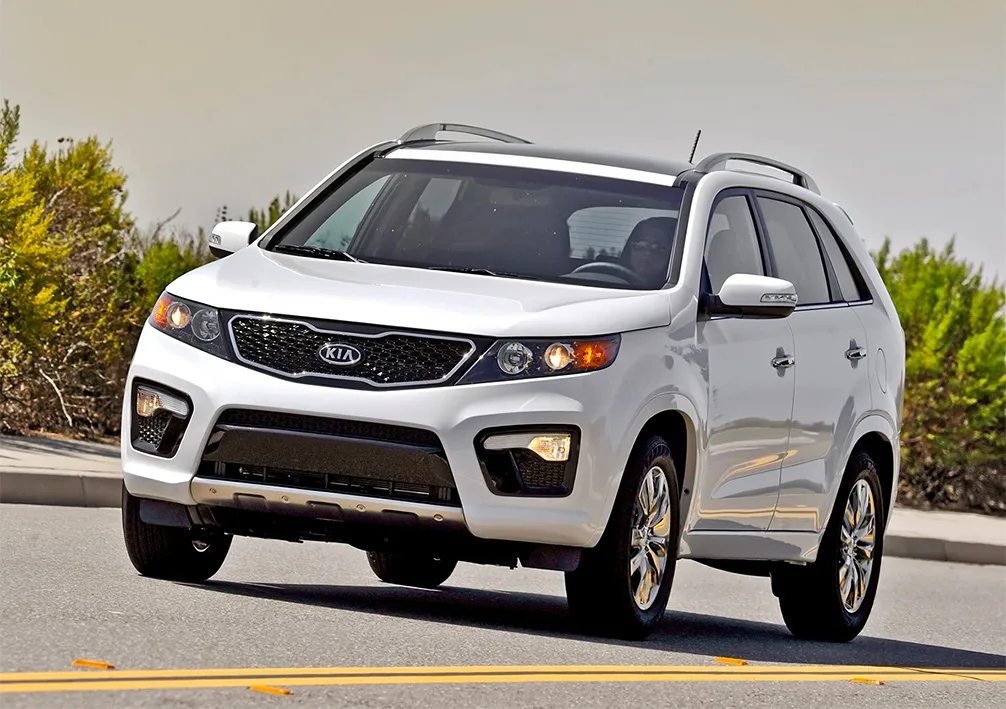
Around 2012, Kia offered US buyers of the Sorento a 10-year or 100,000-mile powertrain warranty. For an extra $7,000 you could remove the mileage limit. Most people would call that money wasted. One buyer in Minneapolis paid it anyway.
Ten years later, a technician at the dealer’s service department posted the car’s history, without naming the owner. The odometer read 608,061 miles, or about 978,600 km, just short of a million kilometres.
The numbers
- 203 engine oil changes, roughly one every 3,000 miles (4,800 to 5,000 km).
- 20 transmission fluid changes.
- 9 replacement engines, so on average each one lasted about 60,000 miles (close to 100,000 km).
- 4 replacement transmissions, about 120,000 miles (200,000 km) each.
The technician said the car was driven extremely hard for its whole life. The failed engines had broken pistons, damaged bearings and crankshafts. His point was that Kia honoured the warranty every single time, even in a case like this. Kia was probably relieved when the ten years ran out.
The story also fits a wider pattern. In the years that followed, Kia and Hyundai issued large recalls for Theta II four-cylinder engines in the Sorento and other models, related to bearing wear and engine seizure.

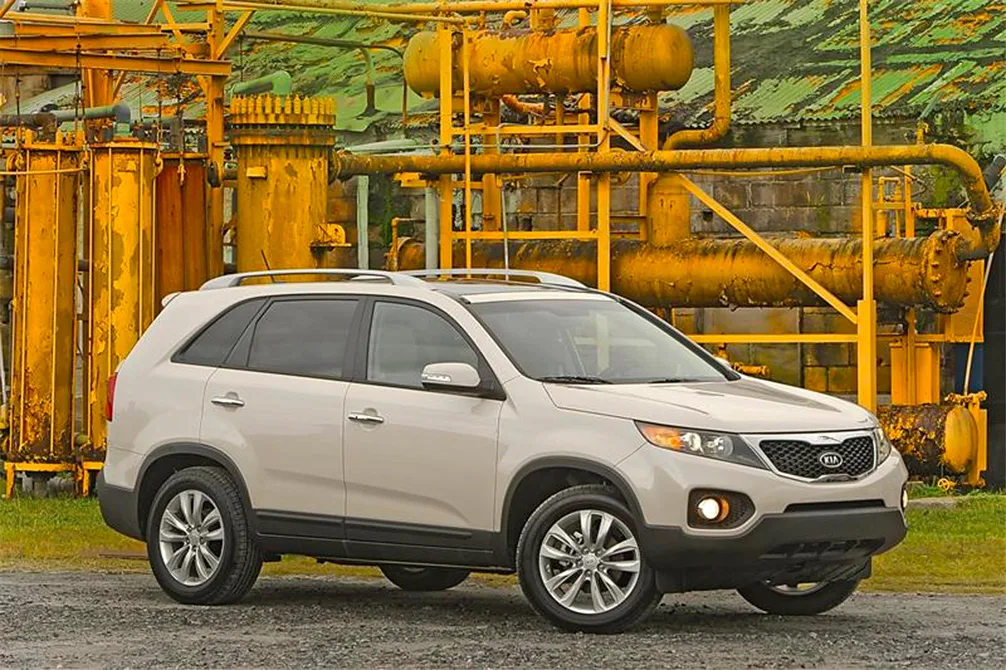
Keeping an older Sorento alive
Not every owner has an unlimited warranty. If you are dealing with bearing noise, a knock sensor update, oil consumption or a transmission swap on a second-generation Sorento, the factory repair manual gives the engine removal and installation procedure, bearing clearances, torque specs, transmission fluid specifications and the full wiring diagrams for your VIN.
Our manuals are the manufacturer’s own service information for your VIN, delivered as a PDF with working hyperlinks: click a step in the index, or a connector in a wiring diagram, and you go straight to it. No scanned pages, no guessing.
- 2011 Kia Sorento factory repair manual
- 2012 Kia Sorento factory repair manual
- 2013 Kia Sorento factory repair manual
- 2014 Kia Sorento factory repair manual
- 2015 Kia Sorento factory repair manual
Newer generations: 2016, 2017, 2018, 2019, 2020 and 2021, 2022, 2023, 2024, 2025, 2026.
